The Basics of Breeding
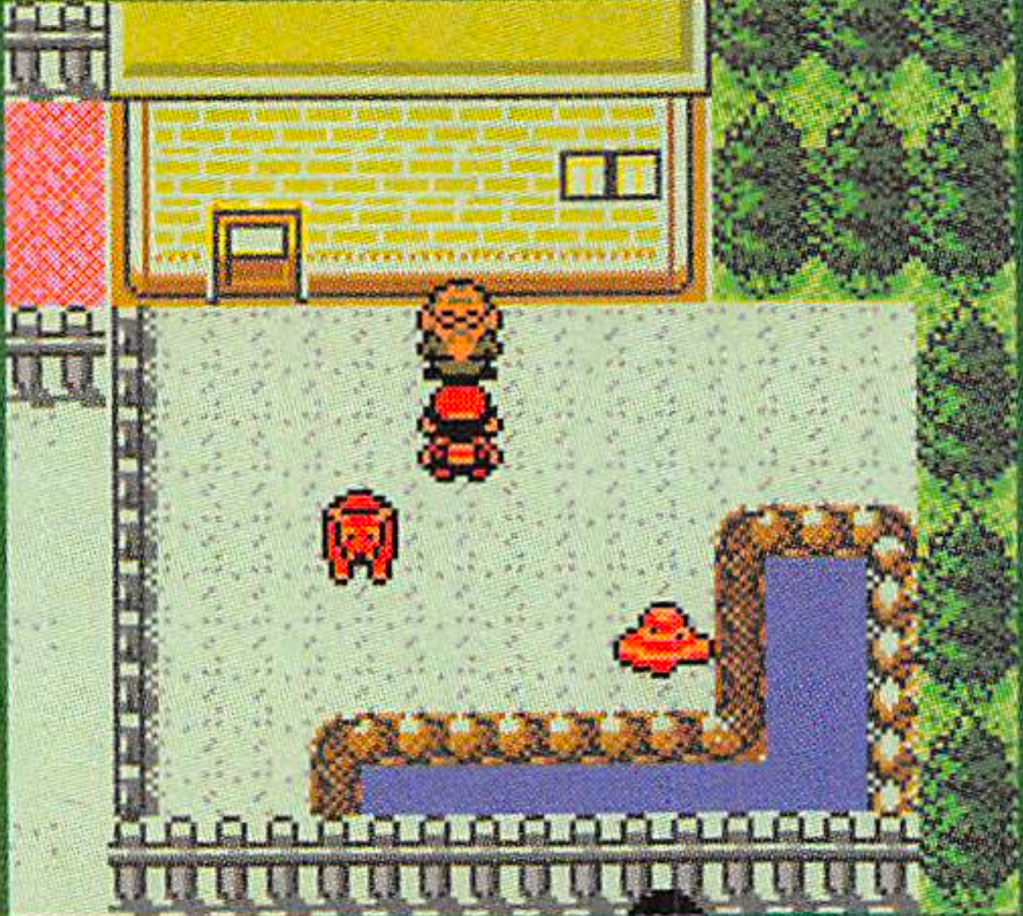
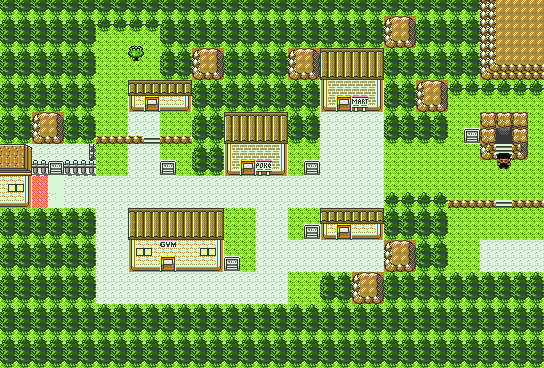
Breeding in Pokémon Gold, Silver, and Crystal might seem simple on the surface, but it’s one of those mechanics where the more you dig in, the more you can optimize. At its core, the process begins at the Day-Care Center on Route 34, just south of Goldenrod City. It’s easy to miss on your first pass, tucked between the trees and trainers, but it’s home to a system that lets you create Pokémon in a way that’s tailored to your goals—whether you’re chasing Egg Moves, stat boosts, or shiny variants.
To get started, leave two compatible Pokémon with the Day-Care Couple: typically, that’s a male and a female of the same Egg Group. Alternatively, you can substitute one of them with Ditto, which functions as a sort of universal breeder—it can pair with almost any non-legendary, non-baby Pokémon to produce an egg. When the two Pokémon are left together, they’ll “grow closer” over time as you walk. After a certain number of steps (the exact count varies depending on how well the pair gets along), the Day-Care Man will take a step forward to let you know an Egg has appeared.
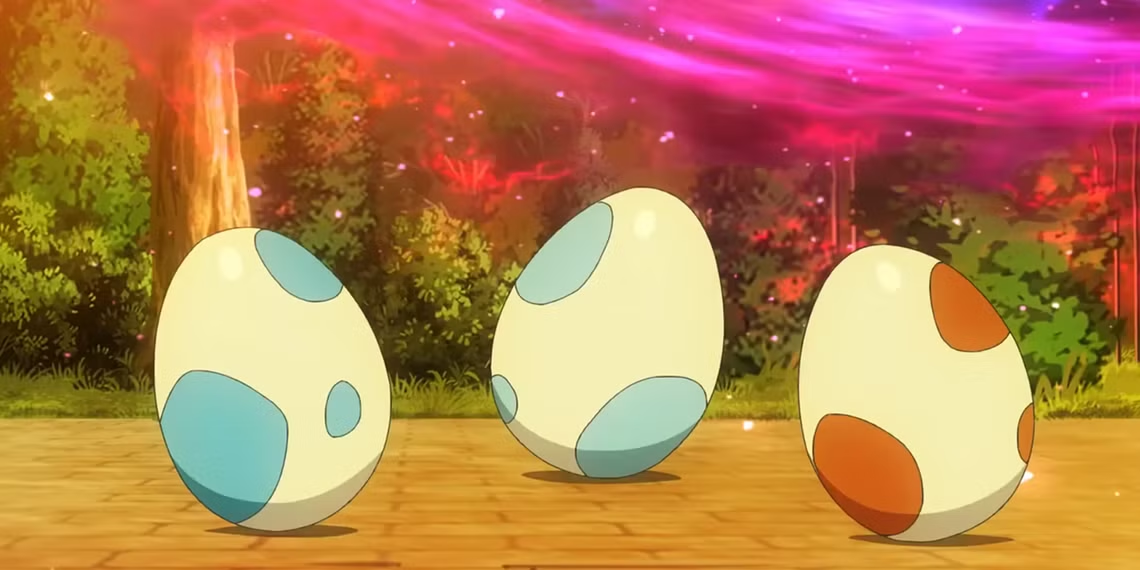
Once you have an Egg, you’ll need to hatch it by walking—again, the number of steps depends on the species, but generally ranges from a few thousand to over ten thousand steps. The hatched Pokémon will be at Level 5 and will typically be the same species as the female parent (unless you’re using Ditto, in which case the non-Ditto parent determines the species). This makes female Pokémon, especially rarer ones, particularly valuable when planning a breeding chain.
Compatibility between the two Pokémon affects how quickly an Egg appears. Pokémon of the same species and different Trainer IDs produce Eggs more quickly than those of different species or same Trainer ID. The Day-Care Couple will actually give you clues about how compatible your pair is. If they say the two Pokémon “seem to get along very well,” expect an Egg sooner than if the Pokémon “don’t like each other much.” But even less compatible pairs can still result in an Egg—it just takes longer.
There are a few important caveats: Pokémon must be in the same Egg Group (more on that later), and certain species—like all Legendary Pokémon and most baby Pokémon—are completely unbreedable. You also can’t breed if both Pokémon are male, both are female, or if one or both are genderless (unless one of them is Ditto). The system has just enough constraints to keep things from getting too easy, but enough flexibility to open up a lot of possibilities once you start planning things out.
It’s also worth noting that Pokémon don’t level up from battles while in the Day-Care in Generation 2—they only gain levels from the steps you take. This makes it a less-than-ideal training method, but great for passive leveling or preparing a Pokémon for evolution. Just be warned: they may learn new moves as they level up, overwriting existing ones, so be sure to retrieve them before you lose a move you want to keep.
Understanding Egg Groups
If you’re wondering why two Pokémon can’t breed even though they’re both male and female, the answer probably lies in Egg Groups. Every Pokémon belongs to one (or sometimes two) of these groups, and only Pokémon in matching Egg Groups can produce eggs together. It’s less about type or appearance and more about hidden compatibility. For example, a Wartortle and a Feraligatr can breed because they’re both in the Water 1 group, even if they’re from different regions or types.
Egg Groups are the key to unlocking all kinds of strategic breeding chains. Let’s say you want to get a particular move onto a Pokémon, but that move can’t be learned by a parent of the same species. With the right Egg Group overlap, you can breed it onto a middle Pokémon first, then pass it along the chain until it ends up on your target. It’s a clever little puzzle that rewards planning.
Then there’s Ditto, who belongs to its own special group and can breed with just about anything—male, female, or genderless (as long as it’s not unbreedable). That makes Ditto incredibly useful if you want to duplicate Pokémon without having to hunt down specific pairings or genders. Just remember that baby Pokémon like Pichu, Cleffa, and Magby belong to the Undiscovered Group—they can’t breed at all.
Inheriting Moves: Egg Moves
One of the coolest things about breeding in Gen 2 is the ability to hatch Pokémon with moves they’d never normally learn through level-up or TMs. These are called Egg Moves, and they’re often powerful, surprising, or just plain fun. The way it works is this: if the father knows a move that the baby can learn via breeding—and the baby’s species supports it—it’ll hatch knowing that move.
This mechanic opened up so many possibilities for customizing your team. Want a Charmander that knows Belly Drum? Breed it. How about a Growlithe with Morning Sun? Breed it. You can even layer on multiple Egg Moves at once, as long as the father knows them all and the offspring’s movepool supports them. The mother’s moves don’t count in Gen 2—it’s all about the father for inherited moves (unless Ditto is involved, in which case Ditto acts like the male).
Egg Moves were also the start of some really clever cross-generational strategies. Players would breed for a rare move in Gen 2, trade the baby forward to Gen 3, and evolve it into a Pokémon with a unique, legacy move set that could no longer be obtained. So if you’re a collector or battle strategist, Egg Moves are worth diving into—you never know when an odd combo will come in handy.
Determinant Values (DVs) and Stat Inheritance
Behind every Pokémon’s visible stats—Attack, Defense, Speed, Special—there’s a set of hidden numbers that determines how high those stats can go. In Gen 2, these hidden numbers are called DVs (Determinant Values), and they range from 0 to 15. A DV of 15 is perfect, meaning that stat has its maximum potential.
In the Generation 2 games, a baby Pokémon inherits Determinant Values (DVs) from its parents. The inheritance depends on which parent is which. Typically, the baby takes its Defense DV from the parent of the opposite gender. If one of the parents is Ditto, then the baby will inherit its Defense DV from Ditto instead.
The Special DV has a 50% chance of being passed down directly. If it’s not passed directly, the game will shift it either up or down by 8, depending on its value: if it’s between 0–7, it goes up by 8; if it’s between 8–15, it drops by 8. It’s a quirky little mechanic, but it makes Special a sort of wildcard stat in breeding.
Attack and Speed DVs, on the other hand, are always randomly generated, while HP is calculated based on the values of the other four stats, using the same formula used for wild Pokémon.
Because of how these mechanics work, the odds of a baby Pokémon ending up with the exact same DVs as the opposite-gender parent is 1 in 512—a rare but not impossible outcome.
Interestingly, if both parents have the same Defense DV, and their Special DVs are either exactly the same or differ by 8, the game will flag them as incompatible for breeding. This is thought to be a safeguard to prevent breeding between close relatives—a subtle but clever little detail in the system.
So if you’re trying to hatch a baby Pokémon with better stats, it helps to breed parents that already have high DVs. It’s a bit of a guessing game without modern tools like IV calculators or Judge functions, but with enough trial and error, you can breed Pokémon that come out stronger than their wild counterparts.
Breeding for Shinies
Back in the day, seeing a shiny Pokémon felt like catching a ghost—rare, surprising, and incredibly exciting. In Generation 2, shiny Pokémon were introduced, and they weren’t just a random visual effect. Their sparkle was tied directly to DVs. Specifically, a Pokémon with Attack, Defense, Speed, and Special DVs set to certain values—2, 3, 6, 7, 10, 11, 14, or 15—had a 1 in 8192 chance of being shiny in the wild.
But in breeding, you could dramatically increase your chances. If you breed two Pokémon that both have shiny-compatible DVs, the odds of getting a shiny offspring jump to roughly 1 in 64. That’s a massive improvement, and it gave rise to one of Gen 2’s most rewarding challenges: shiny hunting through eggs. To make it happen, you’d need one shiny parent or two parents with the right DV combinations. Then it was just a matter of hatching as many eggs as your patience would allow.
Wrapping Up
Breeding in Generation 2 may seem like a background mechanic at first glance, but for dedicated trainers, it opens the door to incredible customization and strategic depth. What starts as a simple visit to the Day-Care quickly evolves into a complex system where every decision—from pairing species in the right Egg Group to carefully selecting moves and DVs—can make a big impact on your team. Whether you’re passing down rare Egg Moves, maximizing stat potential, or trying your luck at hatching a shiny, the breeding system rewards those who are willing to experiment, plan ahead, and hatch a lot of eggs.
It’s this blend of mystery and mastery that has kept Generation 2 breeding so memorable. Even without modern conveniences like IV calculators or breeding apps, the process has a certain charm—an old-school puzzle that rewards both knowledge and dedication. If you’re looking to go beyond wild encounters and really shape your Pokémon from the ground up, there’s no better place to start than the Day-Care on Route 34. The perfect partner, the perfect move, or even that elusive sparkle might just be an egg away!

 porygonpress.com
Leave a comment